
What is a cleanroom and the role of a cleanroom in the pharmaceutical industry
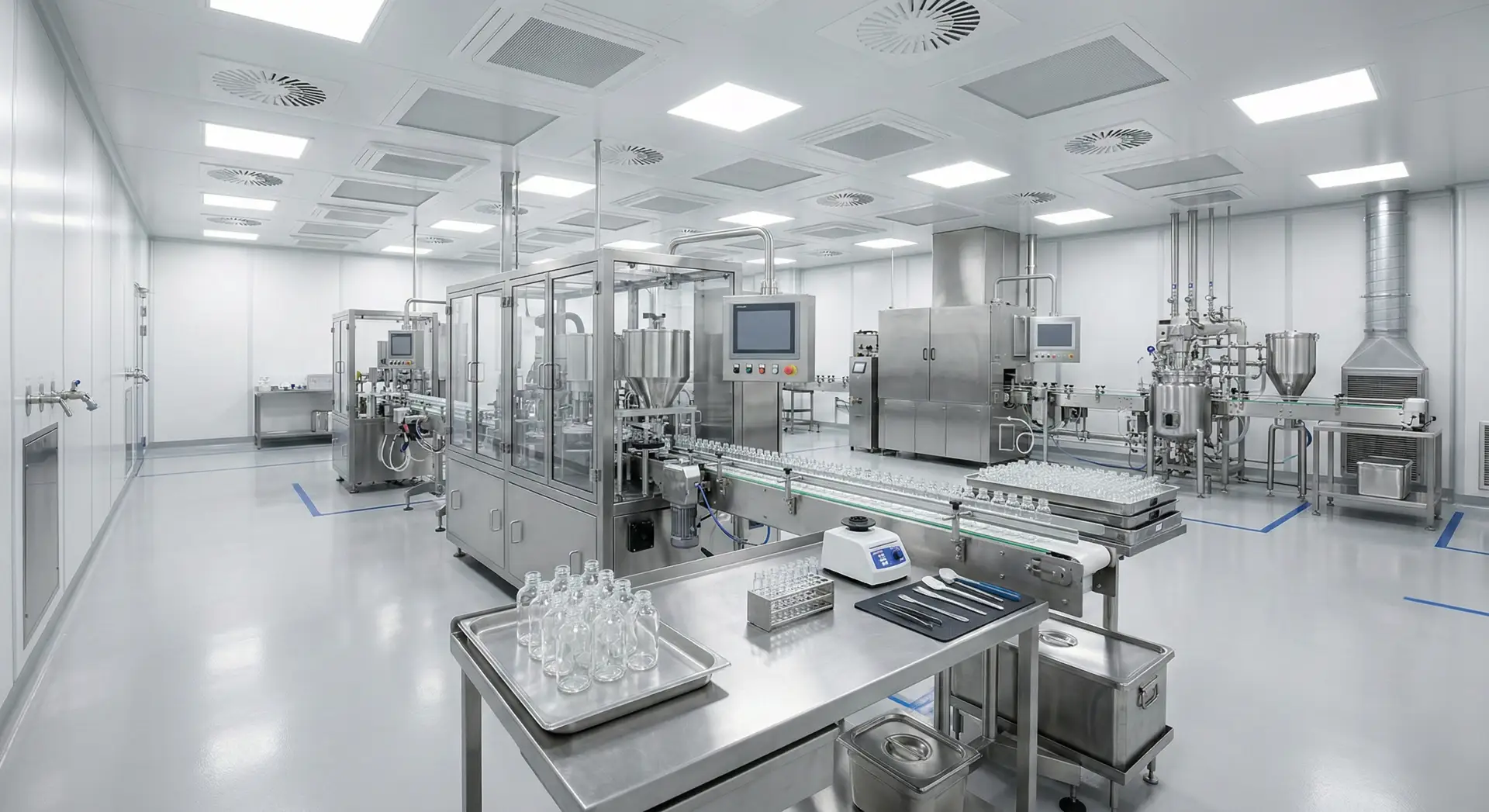
What is a Cleanroom?
It is well isolated, well controlled from contamination, and actively cleaned. A cleanroom is a controlled environment designed to maintain extremely low levels of airborne particles. These spaces are carefully isolated to prevent contamination and are equipped with systems that continuously clean the air. Cleanrooms are critical in fields like scientific research and industrial manufacturing, particularly for processes requiring nanometre-scale precision, such as semiconductor device production.
The primary function of a cleanroom is to keep contaminants—ranging from dust to airborne microorganisms and vaporized particles—away from sensitive materials or equipment being handled within. This ensures that the processes conducted inside the cleanroom remain uncontaminated.
Everything You Need to Know About Cleanrooms: Functioning, Types, and Benefits
Cleanrooms play a pivotal role in maintaining precision, cleanliness, and safety in industries where even the tiniest contaminants can cause significant issues. These controlled environments are meticulously designed to limit airborne particles and ensure a sterile setting for sensitive processes. From pharmaceuticals and biotechnology to food production and packaging, cleanrooms are indispensable in various fields.
Cleanrooms: A cleanroom is a highly controlled environment where the level of airborne particles, temperature, humidity, and pressure are carefully regulated. The goal of a cleanroom is to provide a sterile and contaminant-free workspace that meets specific cleanliness standards, such as ISO classifications or GMP (Good Manufacturing Practices) guidelines.
A pharmaceutical cleanroom is a cleanroom used for the manufacturing of pharmaceutical products such as drugs. They are required by the FDA to ensure the safety and efficacy of the drugs. Most importantly, pharmaceutical cleanrooms must be very sterile and have very demanding hygiene requirements. They must be inclined to be sterile. So that there is no drop in production.
Role of a cleanroom in the pharmaceutical industry?
Cleanrooms are specialized environments where factors like temperature, pressure, humidity, and air filtration are meticulously controlled to facilitate testing and manufacturing processes. This stringent control minimizes the introduction, generation, and retention of particles, thereby reducing contamination risks to both personnel and products.
In the pharmaceutical sector, cleanrooms are indispensable. They prevent airborne particles from compromising the microbiological and physical integrity of raw materials and finished medications. To achieve this, cleanrooms must uphold the highest standards of cleanliness, ensuring minimal contamination across air, products, equipment, and surfaces such as walls, ceilings, and floors. These surfaces should be designed to resist dirt accumulation and be easy to clean and maintain.
The classification of a cleanroom and its required level of air purity depend on the specific product and the stage of the process that needs protection from contamination. These classifications are guided by both national and international standards.
In Brazil, pharmaceutical companies are mandated to obtain certification that validates their environmental controls before commencing operations. Compliance with standards set by organizations such as the Brazilian Association of Technical Norms (ABNT), the National Institute of Metrology, Quality, and Technology (INMETRO), and the National Health Surveillance Agency (Anvisa) is essential. These regulations ensure that manufacturing environments meet the necessary criteria to maintain product safety and efficacy.
1. Air Cycles and Flow Systems
Airflow systems are the backbone of cleanroom operations. High-efficiency particulate air (HEPA) filters or ultra-low penetration air (ULPA) filters are employed to purify the air, ensuring that contaminants are removed before they can settle. Controlled air cycles regulate the movement of air, preventing contaminants from entering or circulating within the cleanroom.
2. Negative Pressure Systems
Negative pressure cleanrooms are specifically designed to contain contaminants. By maintaining a lower air pressure inside the cleanroom compared to the surrounding environment, any airborne particles or contaminants are kept from escaping the controlled space, safeguarding external environments and personnel.
3. Particle Counters for Monitoring
Environmental monitoring is an integral aspect of cleanroom functionality. Particle counters measure and track the levels of airborne particles, ensuring that the cleanroom complies with required cleanliness standards. Real-time monitoring provides insights into potential contamination sources and helps maintain quality control.
Types of Cleanroom:
Cleanrooms can be customized based on industry requirements, size, and flexibility. Here are two primary types:
1. Modular Cleanrooms
Modular cleanrooms are a versatile and cost-effective solution. They are designed to be easily modified, expanded, or relocated, making them ideal for industries requiring adaptable setups. Modular cleanrooms can be built to meet any cleanliness classification, providing flexibility and scalability without compromising quality.
Features:
- Flexible and easy design.
- Can be easily expanded, reduced or moved.
- Can be built to any ISO classification.
Applications:
Suitable for small manufacturing projects, research laboratories, and industries with personalized requirements.
2. Hardwall Cleanrooms
Hardwall cleanrooms are robust structures designed for more demanding applications, such as manufacturing. These cleanrooms are built with rigid materials that provide better control over airflow and particle contamination. They are ideal for environments requiring stricter standards and more durable setups.
Features:
- Rigid and stable structure.
- More effective for air and particle control.
- Durable and suitable for long-term use.
Applications:
Ideal for pharmaceutical manufacturing, semiconductor manufacturing, and precision engineering processes.
3.Softwall Cleanrooms
Features:
- Made of flexible and lightweight materials.
- Cost-effective and easy to move.
- Suitable for medium levels of cleanliness.
Applications:
Suitable for food processing, industrial manufacturing, and packaging.
4. Negative Pressure Cleanrooms
Features:
The air pressure inside the room is kept lower than the outside air. Prevents contaminants from escaping.
Applications:
For biological research, virology, and work involving hazardous materials.
5. Positive Pressure Cleanrooms
Features:
The air pressure inside the room is kept higher than the outside air. Contaminants cannot enter from outside.
Applications:
For pharmaceutical manufacturing, medical device manufacturing, and research laboratories.
6. Monolithic Cleanrooms
Features:
Absolutely stable and robust construction.
Designed for advanced manufacturing processes.
Uses:
In products requiring high precision and strict cleanliness.
7. Mobile Cleanrooms
Features:
Mobile, designed for temporary needs.
Similar to modular design but easy to transport.
Uses:
For field research, temporary products or experiments
Benefits of Cleanrooms
Cleanrooms offer significant advantages that extend beyond maintaining cleanliness:
Product Quality Assurance:
By minimizing contamination, cleanrooms ensure the integrity and quality of products. This is especially crucial in industries like pharmaceuticals, where even a minor defect can have serious consequences.
Worker Safety:
Cleanrooms protect workers by controlling the exposure to hazardous substances or contaminants, creating a safer workplace. Research Integrity: In research and development, cleanrooms prevent external factors from compromising experiments or studies.
Infection Control:
Cleanrooms are essential in healthcare and biotechnology, where preventing the spread of infections among staff, patients, and samples is a top priority.
Applications of Cleanrooms
Cleanrooms are essential in various industries where maintaining contamination control is crucial to product quality, safety, and functionality. Below are some of the key industries that rely on cleanroom environments:
1. Life Sciences
Cleanrooms are extensively used in the life sciences sector, particularly in research, pharmaceutical manufacturing, and biotechnology. These controlled environments prevent contamination during the development of medical treatments, vaccines, and critical biological research.
2. Military and Aerospace Research
The military and aerospace industries require cleanrooms to ensure that sensitive equipment and components, such as spacecraft and military technology, are free from contaminants. Cleanrooms maintain the integrity and reliability of these high-precision systems.
- Air cleanliness classifications
- Pressure differentials between rooms
- Environmental monitoring protocols
- System validation and documentation
3. Computer Server Holding
In data centers, cleanrooms play a vital role in housing computer servers and other critical IT infrastructure. These environments prevent the accumulation of dust and particles that could affect the performance and lifespan of delicate electronic equipment.
4. Computer Manufacturing
The production of computers, semiconductors, and other electronics necessitates a cleanroom environment to avoid the introduction of particles that could compromise the functionality of microchips and other vital components.
5. Medical Device Production
Cleanrooms are also crucial in the production of medical devices, where any contamination could lead to product failure or pose risks to patient health. Cleanrooms ensure that manufacturing processes for items such as surgical tools, implants, and diagnostic devices are conducted in a contamination-free setting.
6. Food Processing
The food processing industry uses cleanrooms to maintain the purity of food products during production, packaging, and storage. These clean environments help reduce the risk of foodborne illnesses and ensure compliance with food safety standards.
Conclusion:
Cleanrooms are a cornerstone of modern industry, ensuring precision, safety, and compliance with stringent standards. Whether it's for manufacturing, research, or healthcare.
Frequently Asked Questions (FAQs)
A pharmaceutical cleanroom is a cleanroom used for the manufacturing of pharmaceutical products such as drugs. They are required by the FDA to ensure the safety and efficacy of the drugs. Most importantly, pharmaceutical cleanrooms must be very sterile and have very demanding hygiene requirements. They must be inclined to be sterile. So that there is no drop in production.
In short, the principle of a mixed flow cleanroom is that when a certain amount of clean air is supplied to the room. The clean air supplied is dispersed throughout. And mixed with all the surrounding air. And at the same time, the same amount of air is exhausted through the return air grill.
A clean room is a controlled environment that filters out contaminants such as dust, airborne microbes, and aerosol particles to provide the cleanest possible area. And often, controlled environments help protect the production of products such as electronic devices, pharmaceuticals, and medical devices.
Both the flooring and walls in pharmaceutical cleanrooms are exposed to harsh chemical cleaning. And fiber reinforced plastic (FRP) walls are a common choice, which have very good chemical resistance.
- Modular Cleanrooms
- 2. Hardwall Cleanrooms
- 3. Softwall Cleanrooms
- 4. Negative Pressure Cleanrooms
- 5. Positive Pressure Cleanrooms
- 6. Monolithic Cleanrooms
- 7. Mobile Cleanrooms
A cleanroom is a controlled environment designed to maintain extremely low levels of airborne particles. These spaces are carefully isolated and equipped with continuous air purification systems to prevent contamination. Clean rooms are crucial in areas such as scientific research and industrial manufacturing, especially for processes that require nanometer-scale precision, such as semiconductor device manufacturing.
Most cleanrooms are used for manufacturing products such as electronics, pharmaceutical products, and medical equipment. Life sciences, Military and aerospace research,Computer server holding, Computer manufacturing, Medical device production, and Food processing